
Watch the Trailer!
What is Wicker and the Whispering Flame?
Wicker and the Whispering Flame is a game about exploring unique environments, casting magic spells, collecting treasure, and battling monsters. Developed in Unity, the game features first person gameplay set in procedurally generated levels, featuring a wealth of impactful weapons, spells, and items.
The development of Wicker allowed me to experiment with parts of game development that were totally new to me, from coding enemy AI to building a combat system from scratch.
Features
Development
Several Dangerous types of Monster
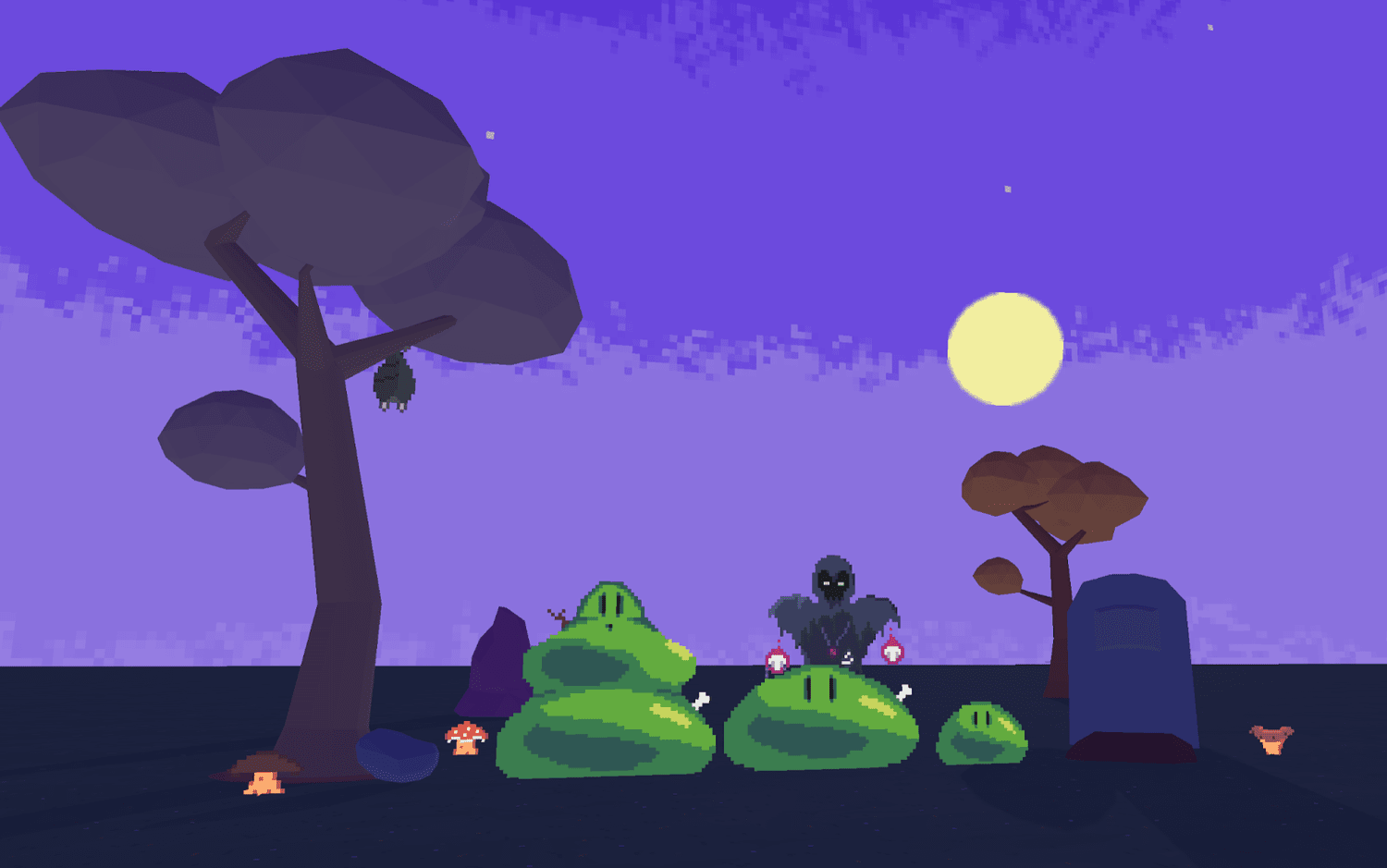
Dodge hostile bats as they pursue you through the treetops. Fight through seemingly endless hoards of oozes. Hide from the watchful eyes wraith, or else dodge the curses they throw at you. Wicker’s monsters all have distinctive behaviors that they employ when hunting you down. Learn their methods and develop a strategy to fight back.

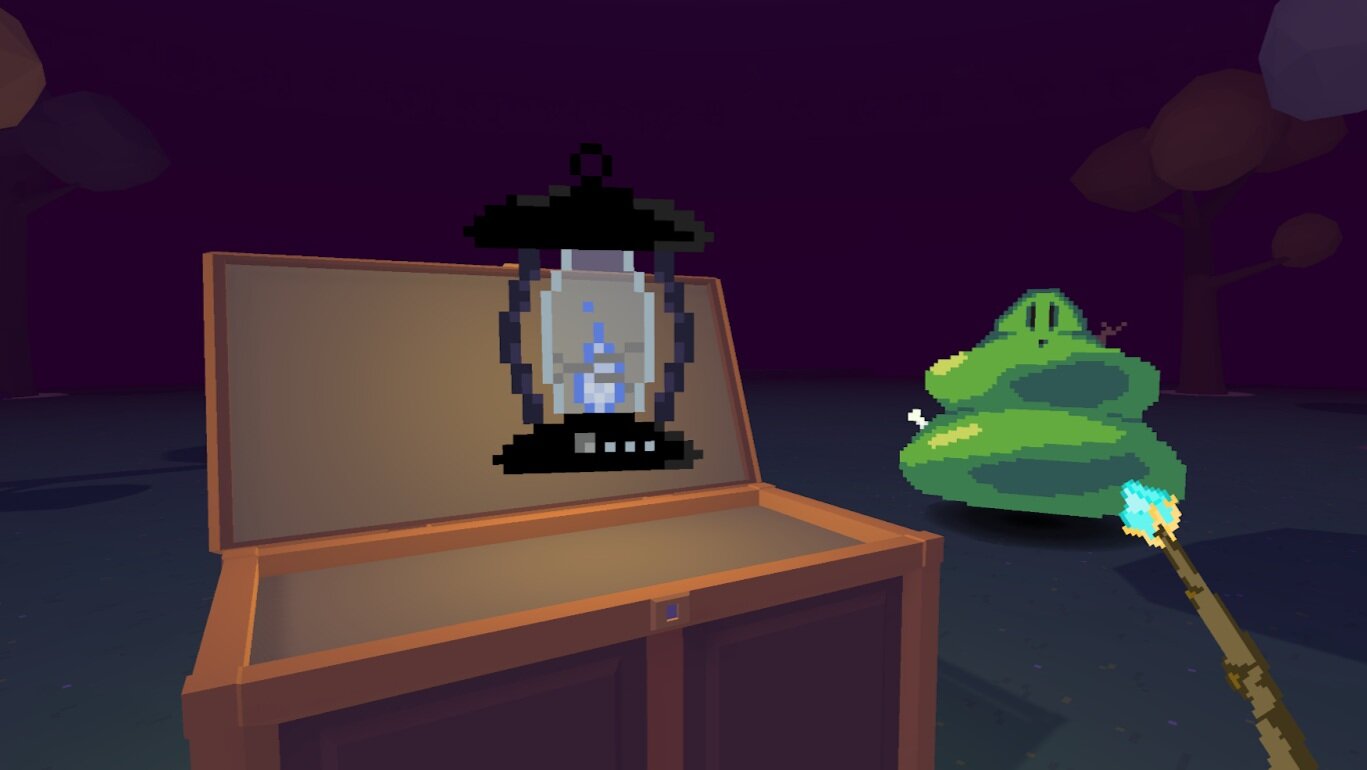
Discover and Collect Impactful Item and Weapons
Wicker features over 20 different items and weapons to discover and collect while you play. Power yourself up by mixing and matching spells, weapons, and magical artifacts which affect how you play.
Procedurally Generated Environments
When you die, return to the forest for a whole new experience. Wicker’s enchanted forest is randomly generated each time you play, meaning no attempt is exactly the same as the last.
The Creation of Wicker and the Whispering Flame
Before the Fall semester even started, I had a general idea of what I wanted to create for my senior thesis project. I have been interested in making games since I was little, and most of my time in IMM has been spent learning about games and game development. I’ve had the opportunity to work on a lot of smaller scale projects over the past few years, and I wanted to use thesis to challenge myself
It took me a long time to come around to an actual premise, and I can’t say exactly what sparked this idea. It was a lot of things, I guess – I’m a big fan of roguelikes (broadly speaking, a genre of game where the player starts from scratch every time they lose, populated with randomly generated levels) and had been messing around with procedural generation for a few months. I also really wanted
The idea developed slowly and steadily from there, and by the end of November the game had a simple proof-of-concept prototype, an artstyle, and a way-too-long game design document. I knew that since Wicker was going to be a larger scale game, I had to be careful during development to keep my systems very flexible and modular. I wouldn’t be able to get anything done if I had to write a whole new s
Naturally, there were still a lot of challenges. Being my first game of this scale, by the later parts of the Spring semester holes were showing in my code, and starting to slow down development a bit. The game also started to struggle with performance issues as it got larger, which were difficult to find and fix. Ultimately, I did manage to release one playtest version of the game, but I wasn’t a
The pandemic wouldn’t seem to be all too much of an issue for a project like this, since it is purely digital, but it posed some problems, mainly with regards to playtesting. It’s much harder to get a good feel for how difficult, or how engaging or understandable your game is without being able to see someone play it in person. It’s also just harder to find playtesters off campus, since the proces
Despite those challenges, I’m very happy with where Wicker is. There are so many more ideas I had for it, but I’m still satisfied that I got the game where it is now. I’m looking forward to continuing to develop it further after graduation.

Eliana Gargiulo